About Hydraulic Bearing Pullers
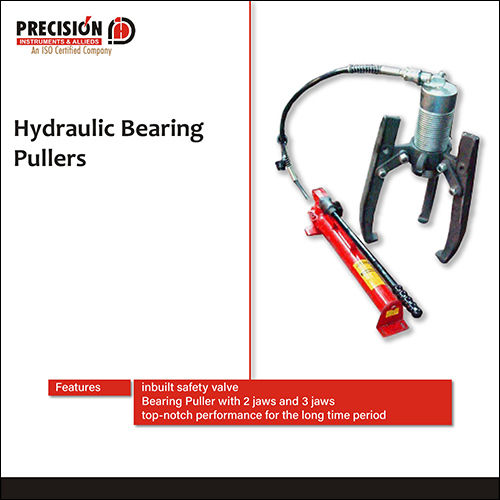
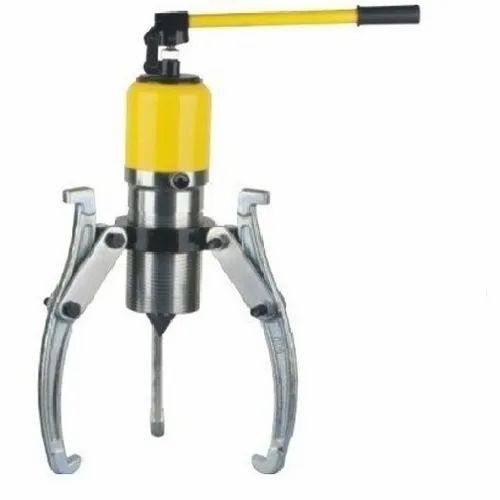
Our firm is engaged in manufacturing and supplying a broad range of Bearing Pullers that are provided with 2 jaws and 3 jaws. These products are used for pulling bearings and other shrink-fit components maintaining their surface finish. Offered pullers are acclaimed by customers for their robust construction, easy installation, reliable operations and quality in tune with industry laid norms. Owing to these features, offered Bearing Pullers are widely used in maintenance and repair field.
Versatility in ApplicationHydraulic Bearing Pullers are designed to adapt to multiple sizes, pressure needs, and mechanical tasks, including the removal of bearings, gears, and pulleys. The availability of various capacities and arm lengths makes them ideal for specialized workshops and large industrial operations alike.
Reliable and Durable ConstructionManufactured from high-grade forged steel, these pullers ensure long-lasting performance and safety. Their hydraulically-driven mechanism, powered by a manual hand pump, is engineered for consistent force distribution, minimizing risk of mechanical damage during use.
Ease of Manual OperationThese pullers utilize a manual hydraulic pump, requiring no electrical power source. The straightforward pump mechanism allows for precise control over lifting time and pressure, making them suitable for field operations and environments where power access is limited.
FAQs of Hydraulic Bearing Pullers:
Q: How do you operate a hydraulic bearing puller?
A: To operate a hydraulic bearing puller, position the arms securely around the part to be removed, ensuring proper alignment. Use the manual hand pump to deliver hydraulic pressure, which gradually increases the pulling force until the bearing, gear, or pulley is extracted safely from its seating.
Q: What types of components can these pullers remove?
A: These pullers are suitable for removing a variety of mechanical assemblies, including bearings, pulleys, gears, and similar components found in industrial machinery and automotive equipment.
Q: When should a hydraulic bearing puller be used instead of a conventional puller?
A: A hydraulic bearing puller should be chosen when dealing with large, tightly-fitted, or high-capacity assemblies where manual or conventional pullers might lack sufficient force, or where controlled, even pressure is critical to avoid component damage.
Q: Where can I use these pullers effectively?
A: Hydraulic bearing pullers are widely applicable in manufacturing plants, repair workshops, automotive service centers, and even remote field locations due to their manual operation and portability.
Q: What is the process for selecting the right puller model?
A: Choosing the appropriate model involves considering the size and capacity required for the task, the maximum lifting height needed, and the pressure capacity. Matching these parameters to your specific application ensures safe and efficient operation.
Q: What are the primary benefits of using a manual hydraulic bearing puller?
A: Key benefits include portability, ease of operation, high power output for larger assemblies, and minimized risk of damage thanks to uniform hydraulic force. The manual mechanism also means no reliance on external power sources.
Q: Are there different sizes and capacities available for various tasks?
A: Yes, these pullers come in multiple capacities ranging from 5 to 100 tons and offer different arm lengths and widths to suit a wide spectrum of mechanical assemblies and working environments.






 Send Inquiry


 Send Inquiry

 Send Inquiry
 Send SMS
 Call Me Free